

More than 40 percent of American homes in humid climates experience problems like mold growth and persistent allergy symptoms related to excessive indoor moisture. For homeowners from Singapore to Brazil, controlling humidity is a constant battle against damp walls, stuffy air, and costly repairs. Discover how modern dehumidifiers tackle these challenges head-on, offering not only improved air quality but also practical ways to safeguard your health and property in any region where humidity rules the seasons.
Table of Contents
- Defining Dehumidifiers And Their Role Indoors
- Types Of Dehumidifiers And Key Differences
- How Dehumidifiers Remove Excess Moisture
- Health, Comfort, And Home Protection Benefits
- Comparing Dehumidifiers With Other Moisture Solutions
- Common Mistakes And Safe Operation Practices
Key Takeaways
| Point | Details |
|---|---|
| Proper Humidity Levels | Maintain indoor humidity between 30 to 50 percent to prevent mold, dust mites, and improve respiratory health. |
| Types of Dehumidifiers | Choose between condensate, desiccant, or whole-house systems based on the specific humidity control needs of your environment. |
| Health and Structural Benefits | Dehumidifiers enhance air quality, protect home structures from moisture damage, and improve overall comfort. |
| Regular Maintenance | Establish a routine for cleaning filters and emptying tanks to ensure optimal performance and air quality. |
Defining Dehumidifiers and Their Role Indoors
A dehumidifier is an essential household device designed to extract excess moisture from indoor air, creating healthier and more comfortable living environments. These appliances remove water vapor through a sophisticated process that prevents humidity from causing potential damage to your home and health.
Moisture control is critical in indoor spaces, particularly in regions with high humidity or areas prone to dampness like basements, bathrooms, and laundry rooms. Dehumidifiers work specifically to curb mold and dust mite growth, which can trigger respiratory issues and allergic reactions. By maintaining optimal humidity levels between 30 to 50 percent, these devices protect both your living space and your personal health.
The core function of a dehumidifier involves drawing ambient air through cooling coils, condensing moisture into liquid water, and then collecting this water in a removable tank or directing it through a continuous drainage system. Different models are designed for specific room sizes and humidity conditions - from compact units for small bedrooms to industrial-strength machines for large commercial spaces. Some advanced models even include additional features like air purification, automatic humidity sensing, and energy-efficient operation modes.
Pro tip: Before purchasing a dehumidifier, measure your room’s square footage and check the device’s moisture removal capacity to ensure optimal performance in your specific indoor environment.
Types of Dehumidifiers and Key Differences
Dehumidifiers come in multiple categories designed to address different moisture control needs across residential and commercial environments. The primary types include condensate dehumidifiers, desiccant dehumidifiers, and whole-house systems, each with unique technological approaches and performance characteristics.
Condensate Dehumidifiers are the most common household units, functioning by cooling air and extracting moisture through refrigeration principles. These models work best in warm environments and are typically used in basements, living spaces, and rooms with high humidity. They are categorized by capacity into small, medium, large, and whole-house units, with removal capacities ranging from 20 to 75 pints of moisture per day depending on the specific model and room size.
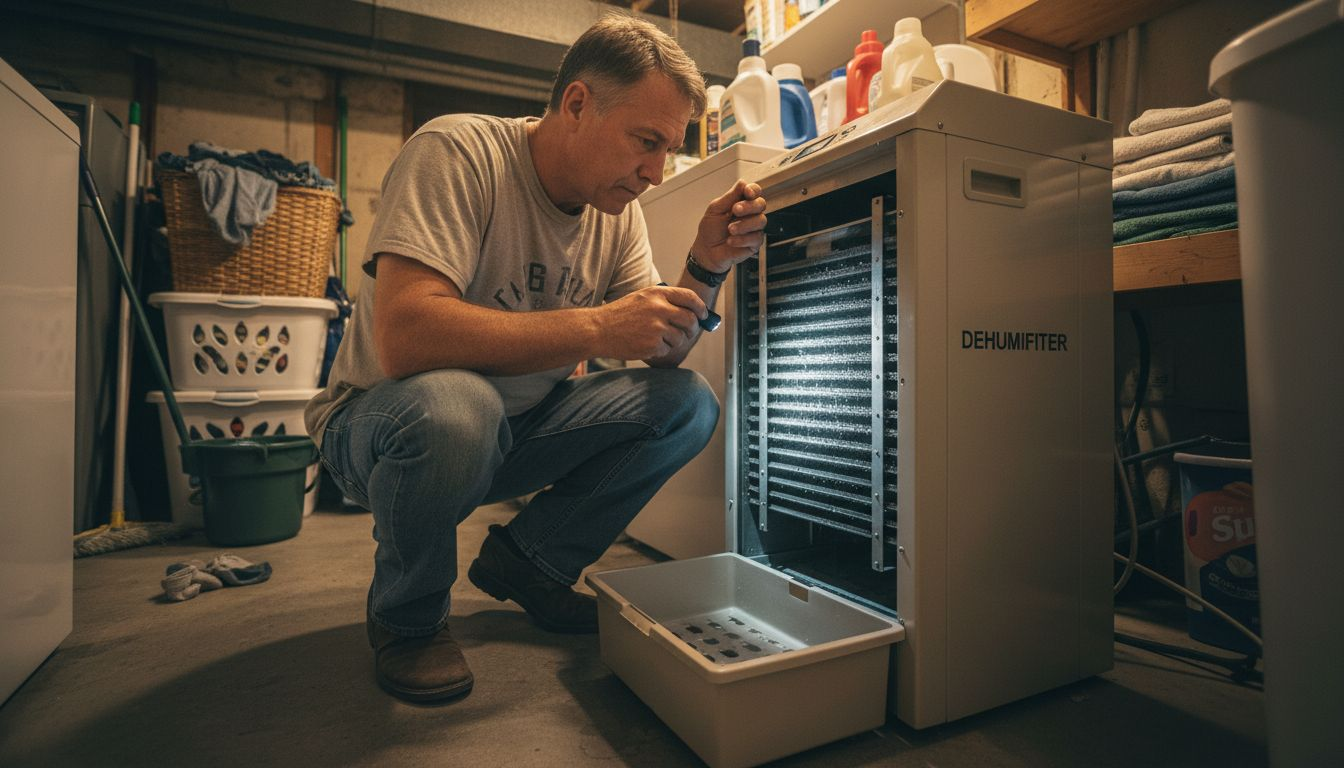
Desiccant dehumidifiers represent a different technological approach, utilizing moisture-absorbing materials like silica gel to extract water from the air. These units excel in cooler environments and are particularly useful in specialized industrial settings, storage facilities, and spaces where traditional refrigeration-based systems might be less effective. Unlike condensate models, desiccant units can operate efficiently at lower temperatures and often generate less noise during operation.
Pro tip: Calculate your room’s square footage and average humidity levels before selecting a dehumidifier to ensure you choose a unit with appropriate moisture removal capacity for your specific environment.
Here’s a comparison of major types of dehumidifiers and their best use cases:
| Type of Dehumidifier | Ideal Environment | Main Technology | Common Applications |
|---|---|---|---|
| Condensate | Warm, humid rooms | Refrigeration coils | Basements, bedrooms |
| Desiccant | Cool, damp spaces | Absorbent materials | Storage, industrial areas |
| Whole-house systems | Entire homes/buildings | Integrated HVAC units | Large residential, commercial |
How Dehumidifiers Remove Excess Moisture
Dehumidifiers employ sophisticated mechanisms to extract moisture from indoor air, transforming humid environments into comfortable living spaces. The primary moisture removal process involves drawing ambient air through a complex system of cooling elements, condensation chambers, and collection mechanisms that systematically reduce humidity levels.
In refrigeration-based dehumidifiers, the most common household type, warm air is pulled over cold evaporator coils that dramatically lower its temperature. Innovative dehumidification technologies control indoor humidity by cooling air below its dew point, causing water vapor to condense into liquid droplets. These droplets are then collected in a removable tank or channeled directly through a continuous drainage system, effectively reducing indoor moisture content without complex intervention.
Alternative dehumidification methods include desiccant technologies, which use highly absorbent materials like silica gel to capture moisture directly from the air. These systems work particularly well in cooler environments and specialized industrial settings, offering an alternative approach to traditional refrigeration-based moisture control. The core objective remains consistent across all technologies: creating a balanced indoor environment with optimal humidity levels that protect both the physical space and the health of its occupants.
Pro tip: Position your dehumidifier centrally in the room and ensure at least 12 inches of clear space around the unit to maximize air circulation and moisture removal efficiency.
Health, Comfort, and Home Protection Benefits
Dehumidifiers offer comprehensive protection for both human health and residential infrastructure, addressing multiple critical environmental challenges simultaneously. By controlling indoor moisture levels, these devices create a multifaceted defense system against potential health risks and structural damage that can emerge from excessive humidity.
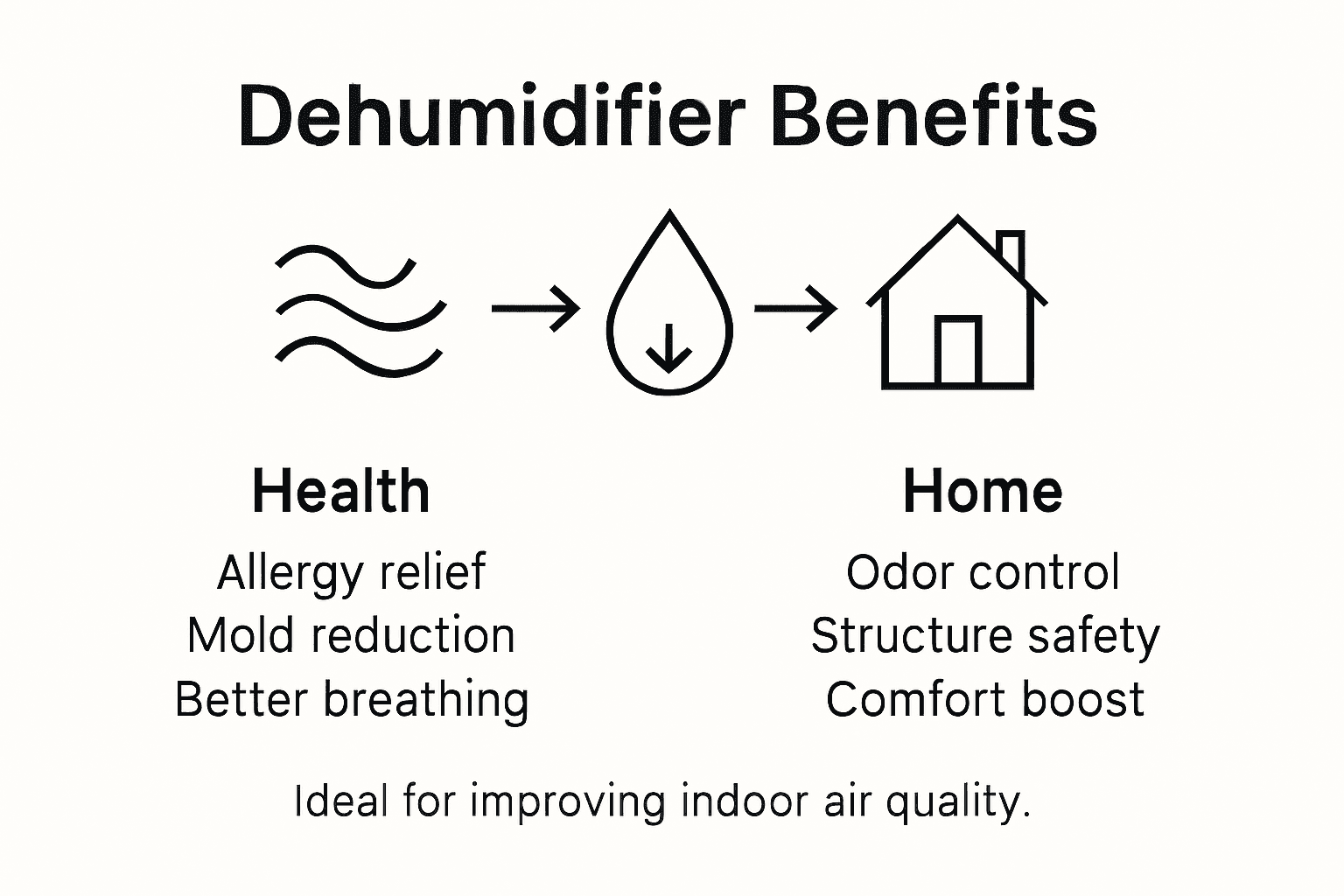
Respiratory health benefits are particularly significant, as dehumidifiers help prevent the growth of harmful microorganisms like mold and dust mites. Individuals with allergies, asthma, or respiratory sensitivities experience substantial relief when indoor humidity remains between 30 to 50 percent. By reducing airborne allergens and creating an environment less hospitable to microscopic irritants, dehumidifiers act as a critical line of defense for vulnerable respiratory systems.
Beyond health considerations, these devices provide essential protection for home structures and personal belongings. Excessive moisture can cause significant damage to wooden furniture, electronics, artwork, and building materials, leading to warping, rust, mold growth, and structural deterioration. Dehumidifiers mitigate these risks by maintaining consistent humidity levels, preventing the gradual but destructive effects of moisture accumulation. Additionally, they contribute to overall comfort by reducing that sticky, uncomfortable feeling associated with high humidity environments and deterring pest populations that thrive in damp conditions.
Pro tip: Monitor your indoor humidity levels with a hygrometer and adjust your dehumidifier settings to maintain a consistent 45 percent humidity for optimal health and home protection.
The table below summarizes key benefits of using a dehumidifier indoors:
| Benefit Type | Impact on Health | Impact on Comfort | Impact on Home Structure |
|---|---|---|---|
| Moisture Control | Reduces allergens | Less sticky feeling | Prevents mold and warping |
| Air Quality | Fewer dust mites | Fresher atmosphere | Protects furniture, devices |
| Consistency | Fewer respiratory issues | Consistent humidity | Reduces gradual deterioration |
Comparing Dehumidifiers with Other Moisture Solutions
Air conditioning and passive ventilation represent alternative approaches to moisture management, each with distinct characteristics that differentiate them from dedicated dehumidification systems. Understanding these differences helps homeowners select the most appropriate moisture control strategy for their specific environmental conditions.
Air Conditioning Systems can simultaneously cool and reduce humidity, but they operate less efficiently for pure moisture control. Unlike specialized moisture management devices, these systems have fundamentally different purposes, with humidity reduction being a secondary outcome. Dehumidifiers, in contrast, provide targeted moisture extraction without necessarily changing ambient temperature, offering more precise and energy-efficient humidity regulation. This specificity makes them superior for spaces requiring dedicated moisture management, such as basements, storage areas, and regions with consistently high humidity.
Passive moisture control methods like natural ventilation, while cost-effective, cannot match the consistent performance of dedicated dehumidification equipment. Strategies such as opening windows, using exhaust fans, and improving air circulation provide minimal moisture reduction compared to mechanical dehumidifiers. These traditional approaches rely on environmental conditions and human intervention, whereas modern dehumidifiers offer automated, consistent moisture control with programmable settings and advanced sensing technologies.
Pro tip: Conduct a comprehensive moisture assessment of different rooms in your home to determine whether you need localized dehumidification or a whole-house moisture management solution.
Common Mistakes and Safe Operation Practices
Proper dehumidifier operation requires understanding potential pitfalls and implementing strategic maintenance protocols to ensure optimal performance and longevity of the device. Homeowners often overlook critical aspects of humidity management that can compromise both equipment effectiveness and indoor air quality.
One of the most significant errors is neglecting regular maintenance and filter cleaning. Dust accumulation and debris can significantly reduce a dehumidifier’s efficiency, forcing the machine to work harder and consume more energy. Owners should establish a consistent cleaning routine, which includes washing removable tanks, wiping down exterior surfaces, and replacing or cleaning filters according to manufacturer recommendations. Failing to do so can lead to reduced performance, increased noise levels, and potential mold growth within the unit itself.
Another common mistake involves incorrect humidity settings and placement. Dehumidifiers are not one-size-fits-all solutions, and inappropriate use can create additional environmental challenges. Setting humidity levels too low can create excessively dry air, which causes its own set of health and comfort issues, such as skin irritation, respiratory discomfort, and increased static electricity. Proper placement is equally crucial - the device should be positioned centrally in the space, with adequate airflow around its intake and exhaust areas, and away from walls or furniture that might obstruct air circulation.
Pro tip: Invest in a hygrometer to monitor your room’s actual humidity levels and adjust your dehumidifier settings accordingly, aiming to maintain a consistent 45-50 percent humidity range.
Take Control of Your Home’s Humidity and Comfort Today
Excess indoor moisture can cause discomfort, health issues, and damage your valuable belongings. If you want to protect your home from mold, allergens, and structural problems by maintaining ideal humidity levels, now is the time to act. Our range of home and kitchen solutions includes dehumidifiers designed to fit your specific needs whether you need a compact unit for a bedroom or a powerful machine for larger spaces.

Discover how easy and affordable it is to create a healthier living environment with quality moisture control. Visit Home and Kitchen products to explore reliable dehumidifiers and accessories that help you maintain the recommended 30 to 50 percent humidity level as explained in the article. Don’t wait for humidity problems to worsen - take the first step towards a fresher, safer home by shopping now at https://myzabka.com. Your well-being and home protection depend on it.
Frequently Asked Questions
What is a dehumidifier and how does it work?
A dehumidifier is a household device that removes excess moisture from indoor air, helping to maintain optimal humidity levels. It works by drawing air over cooling coils, which cools the air below its dew point, causing moisture to condense into liquid water that is collected in a tank or drained away.
Why do I need a dehumidifier in my home?
Dehumidifiers are essential for preventing mold and dust mites, which thrive in high moisture environments. By maintaining humidity levels between 30 to 50 percent, they protect both your health—reducing respiratory issues—and your home, preventing damage to furniture and building materials due to excess moisture.
What are the different types of dehumidifiers available?
There are primarily three types of dehumidifiers: condensate dehumidifiers, which use refrigeration technology and are ideal for warm spaces; desiccant dehumidifiers, which use moisture-absorbing materials and perform better in cooler conditions; and whole-house systems, integrated into HVAC units to serve large homes or buildings.
How do I maintain my dehumidifier for optimal performance?
Regular maintenance includes cleaning the removable tank, wiping down the unit’s exterior, and ensuring that filters are replaced or cleaned according to the manufacturer’s guidelines. Proper placement in a central location with adequate airflow and setting appropriate humidity levels is also crucial to avoid creating overly dry air.