

Over 60 percent of urban homeowners confess that cluttered kitchens slow down their daily cooking routines, yet most still chase the classic American aesthetic of spotless counters. In Asian cities where space is limited, efficiency means more than just buying storage bins or new gadgets. This guide uncovers smart kitchen organization strategies that prioritize how you use your space and time, offering clear solutions to help you create a more functional and enjoyable cooking experience.
Table of Contents
- Defining Kitchen Organization And Key Misconceptions
- Space-Saving Kitchen Designs And Layout Types
- Essential Storage Solutions For Urban Kitchens
- Workflow, Ergonomics, And Daily Cooking Efficiency
- Common Organization Pitfalls To Avoid
- Innovative Trends And Smart Tech Integration
Key Takeaways
| Point | Details |
|---|---|
| Effective Kitchen Organization | Focuses on functionality, accessibility, and adaptability rather than just aesthetics or adding storage. |
| Understanding Layout Types | Choosing the right kitchen layout is crucial for maximizing efficiency, especially in limited spaces. |
| Smart Storage Solutions | Implement vertical storage and multi-functional furniture to optimize small kitchens and reduce clutter. |
| Embrace Smart Technology | Integrating smart kitchen technology can enhance cooking efficiency and reduce food waste through automation and intelligent features. |
Defining Kitchen Organization and Key Misconceptions
Kitchen organization represents more than just tidying shelves and drawers. It’s a strategic approach to designing functional cooking spaces that maximize efficiency and minimize daily stress. Historical research on kitchen design reveals that effective organization transcends aesthetics, focusing instead on creating intuitive environments that support dynamic cooking routines.
Most urban homeowners mistakenly believe that kitchen organization is simply about purchasing more storage containers or having immaculate countertops. However, true organization involves systematic arrangement that considers workflow, accessibility, and personal cooking habits. It means creating designated zones for food preparation, strategic placement of tools, and developing systems that reduce unnecessary movement during cooking.
At its core, kitchen organization encompasses three fundamental principles: functionality, accessibility, and adaptability. Functional design means every item has a purposeful location that supports cooking efficiency. Accessibility ensures that frequently used tools are within easy reach, reducing time wasted searching through cluttered spaces. Adaptability allows the kitchen to evolve with changing cooking styles and household needs.
Key Organizational Misconceptions:
- More storage automatically means better organization
- Organization is purely aesthetic
- One-size-fits-all approach works for every kitchen
- Expensive organizational tools are necessary for efficiency
Pro tip: Start your kitchen organization journey by observing your actual cooking patterns for one week, noting how you move and which tools you use most frequently.
Space-Saving Kitchen Designs and Layout Types
Kitchen layout design is a critical factor in maximizing functional cooking spaces, especially for urban homeowners with limited square footage. Comprehensive spatial research reveals six primary kitchen configurations, each offering unique advantages for different living environments. Understanding these layouts allows homeowners to optimize their kitchen’s efficiency and workflow.
The six primary kitchen layout types include single-wall, galley, L-shaped, U-shaped, island, and peninsula designs. Each configuration addresses specific spatial challenges and cooking requirements. Global design studies emphasize that space-saving solutions are not universal but must be tailored to individual household needs, cooking habits, and cultural preferences.
Primary Kitchen Layout Types:
- Single-Wall: Perfect for compact apartments, with all appliances and counters along one wall
- Galley: Narrow layout with parallel counters, maximizing efficiency in tight spaces
- L-Shaped: Provides flexible corner space and improved workflow
- U-Shaped: Offers maximum storage and countertop area
- Island: Adds extra workspace and serves as a central cooking/gathering point
- Peninsula: Provides additional counter space without requiring full island installation
Considerations for Layout Selection:
Here’s a compact comparison of kitchen layout types and their ideal use cases for urban homes:
| Layout Type | Best For | Main Strengths |
|---|---|---|
| Single-Wall | Studio apartments | Space-saving simplicity |
| Galley | Small urban kitchens | Maximum efficiency |
| L-Shaped | Open-plan layouts | Flexible zoning |
| U-Shaped | Large family kitchens | Ample storage, counters |
| Island | Social cooking spaces | Extra prep area |
| Peninsula | Narrow or transitional | Added surface, accessible |
- Available square footage
- Number of people cooking simultaneously
- Frequency of cooking
- Storage requirements
- Appliance placement
Pro tip: Measure your kitchen space precisely and create a scaled drawing before selecting a layout to visualize potential configurations and potential workflow improvements.
Essential Storage Solutions for Urban Kitchens
Urban kitchen design demands innovative storage strategies that transform limited spaces into highly functional cooking environments. Comprehensive storage research reveals that successful urban kitchen organization goes beyond simple shelving, requiring thoughtful integration of compact cabinetry, vertical storage solutions, and multi-functional furniture.
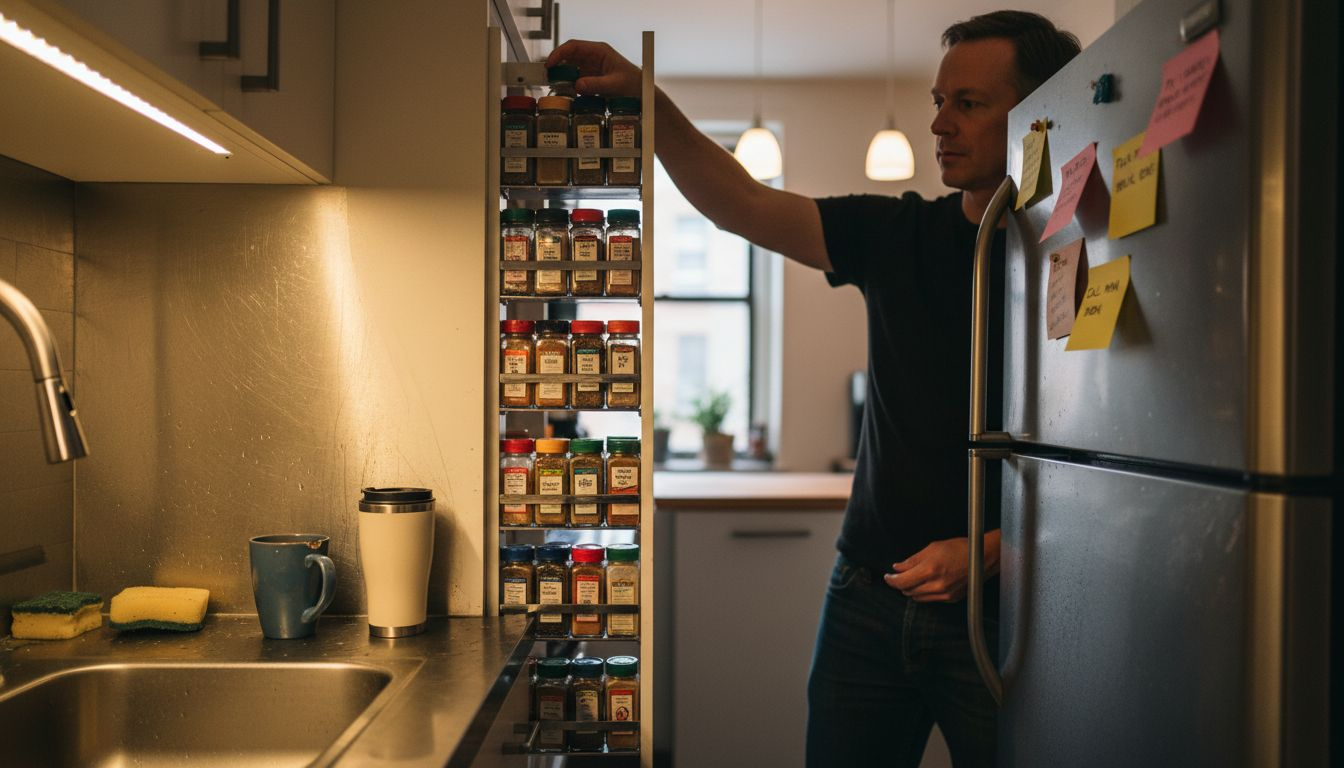
Practical storage strategies emphasize the importance of categorizing kitchen items according to frequency of use and implementing intelligent organization systems. This approach allows urban dwellers to maximize every square inch of available kitchen space, creating efficient cooking zones that feel spacious and uncluttered.
Innovative Storage Solution Categories:
-
Vertical Storage Systems
- Wall-mounted racks
- Magnetic knife strips
- Hanging pot and pan organizers
-
Compact Cabinetry
- Pull-out shelving
- Drawer dividers
- Corner cabinet carousels
-
Multi-Functional Furniture
- Fold-down kitchen tables
- Rolling kitchen islands
- Extendable countertop surfaces
Strategic Storage Placement Principles:
- Store frequently used items at eye level
- Utilize overhead and under-cabinet spaces
- Group similar items together
- Implement clear storage containers
- Rotate and declutter seasonally
Pro tip: Invest in adjustable modular storage systems that can be reconfigured as your kitchen needs change, providing flexibility and long-term organizational efficiency.
Workflow, Ergonomics, and Daily Cooking Efficiency
Innovative kitchen ergonomics research reveals that efficient cooking is not just about equipment, but about creating intelligent spatial relationships that minimize unnecessary movement. The kitchen work triangle and diamond shape rule represent foundational principles for designing cooking spaces that reduce physical strain and maximize productivity during meal preparation.
Effective workflow design considers three critical zones: preparation, cooking, and cleaning. Each zone should be strategically positioned to create smooth transitions between tasks, reducing physical effort and mental fatigue. Optimal kitchen design means creating intuitive pathways that allow cooks to move naturally and efficiently, with frequently used items placed within easy reach.
Key Ergonomic Design Principles:
-
Preparation Zone
- Counter height matching user’s elbow level
- Adequate workspace for chopping and ingredient organization
- Good lighting and comfortable standing position
-
Cooking Zone
- Stove positioned for minimal walking distance
- Heat-resistant surfaces near cooking areas
- Appropriate ventilation
-
Cleaning Zone
- Dishwasher near sink for efficient dish management
- Trash and recycling bins strategically placed
- Easy access to cleaning supplies
Movement Optimization Strategies:
- Minimize crossing paths between zones
- Keep frequently used items at arm’s length
- Create clear, unobstructed walkways
- Design counters with ergonomic height variations
- Implement pull-out shelving for easier access
Pro tip: Periodically observe your own cooking movements and identify repetitive inefficiencies, then redesign your kitchen layout to eliminate unnecessary steps and reduce physical strain.
Common Organization Pitfalls to Avoid
Kitchen organization is a delicate balance between functionality and practicality, with numerous potential missteps that can transform an efficient space into a cluttered nightmare. Many urban homeowners inadvertently create disorganization by adopting well-intentioned but ultimately counterproductive strategies that compromise their cooking environment’s effectiveness.
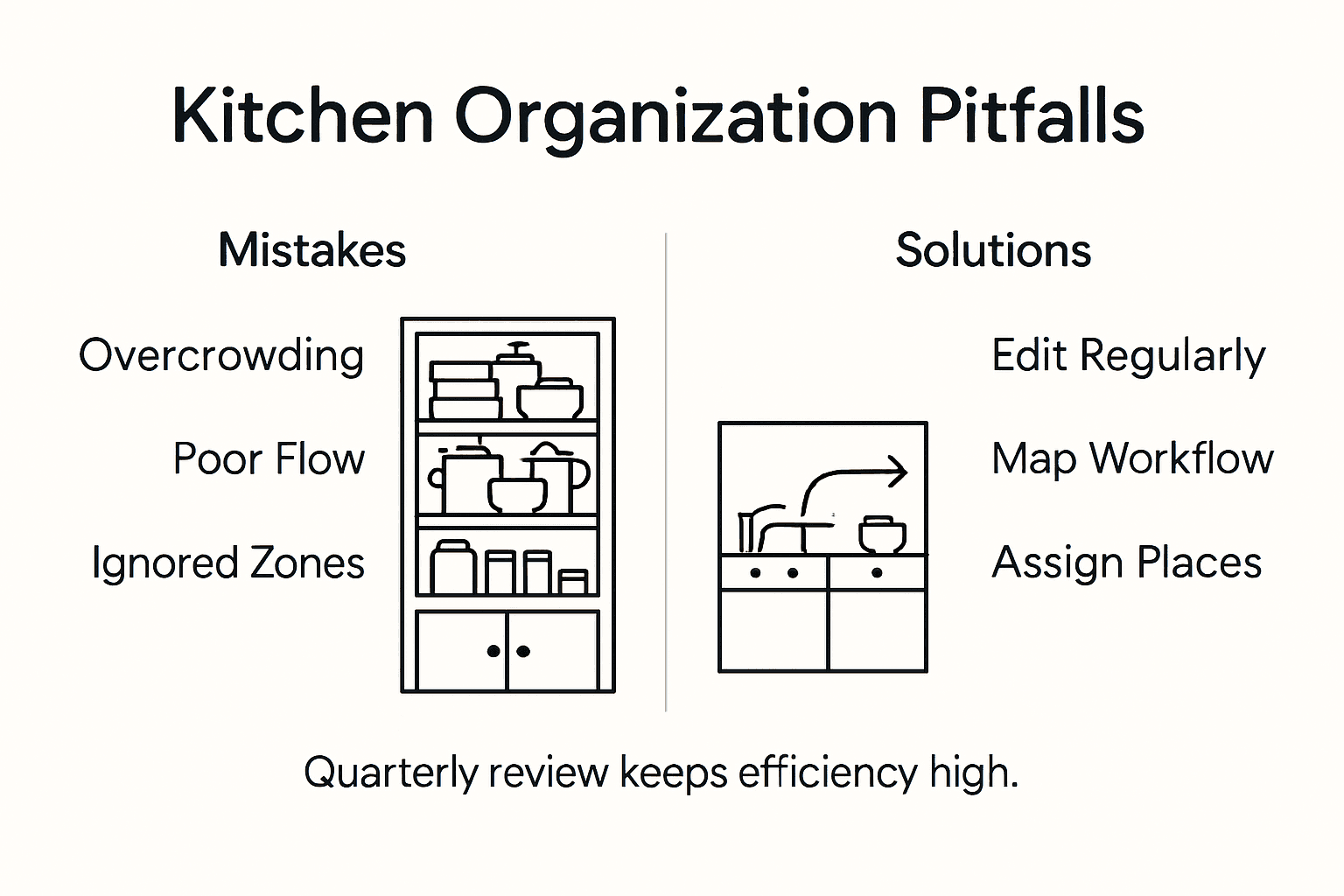
The most common organizational mistakes stem from three primary misconceptions: overbuying storage solutions, failing to periodically reassess kitchen contents, and neglecting the importance of strategic item placement. These errors can lead to wasted space, increased stress during cooking, and a perpetual sense of chaos in what should be a streamlined culinary workspace.
Critical Organization Pitfalls:
-
Overcollecting Kitchen Gadgets
- Purchasing single-use tools
- Keeping redundant equipment
- Failing to regularly audit kitchen inventory
-
Ineffective Storage Strategies
- Ignoring vertical storage potential
- Storing items far from usage zones
- Using inappropriately sized containers
-
Workflow Disruption
- Blocking primary cooking paths
- Mixing frequently and rarely used items
- Neglecting ergonomic placement principles
Red Flags in Kitchen Organization:
- Drawers that are impossible to close
- Cabinets with hidden, forgotten items
- Constant struggle to find basic cooking tools
- Purchasing duplicates due to poor visibility
- Feeling overwhelmed when cooking
Pro tip: Conduct a quarterly kitchen audit, removing unused items and reorganizing spaces to maintain an efficient, stress-free cooking environment.
Innovative Trends and Smart Tech Integration
Emerging smart kitchen technologies are revolutionizing how urban homeowners interact with their cooking spaces, transforming traditional kitchens into intelligent, responsive environments. The integration of Internet of Things (IoT) devices, artificial intelligence, and advanced sensors enables unprecedented levels of automation and personalization, making cooking more efficient, intuitive, and enjoyable.
Connected kitchen innovations represent a significant leap in culinary technology, offering features that go far beyond basic functionality. Smart refrigerators can now track inventory, suggest recipes based on available ingredients, monitor food freshness, and even place grocery orders automatically. Interactive countertops and voice-activated systems allow seamless control of cooking processes, reducing physical effort and increasing precision.
Key Smart Kitchen Technology Categories:
-
Intelligent Appliance Systems
- Voice-controlled cooking equipment
- WiFi-enabled refrigerators
- Automated inventory tracking
-
Sensor and Monitoring Technologies
- Temperature and humidity sensors
- Energy consumption tracking
- Food freshness monitoring
-
AI-Powered Cooking Assistants
- Personalized recipe recommendations
- Automated cooking instructions
- Nutritional intake analysis
Technology Integration Benefits:
The following table highlights how smart kitchen technologies address common organization challenges:
| Smart Feature | Improves Organization By | Typical Benefit |
|---|---|---|
| AI Recipe Assistant | Suggests meals with on-hand items | Streamlines meal planning |
| Automated Inventory | Tracks ingredient levels | Prevents overbuying |
| Voice-Controlled Devices | Hands-free operation | Reduces workflow disruption |
| Food Freshness Sensors | Notifies of expiring foods | Minimizes food waste |
- Reduced food waste
- Enhanced cooking precision
- Personalized nutrition management
- Energy efficiency
- Simplified meal planning
Pro tip: Start by integrating one smart technology at a time, selecting devices that directly address your specific cooking challenges and workflow needs.
Transform Your Kitchen Into a Streamlined Cooking Space Today
Struggling with kitchen clutter and inefficient layouts can make cooking more stressful than it should be. This article highlights the importance of functionality and smart storage solutions to improve your workflow and reduce daily hassle. If you want to eliminate wasted space and create a kitchen that truly supports your cooking style explore our Kitchen Essentials – Myzabka collection. Find tools and storage innovations designed to help you organize with ease and boost efficiency.
Start your journey toward a hassle-free kitchen now by visiting Myzabka for smart, practical products that fit your unique space and needs. Don’t wait to enjoy a kitchen that works for you—discover simple solutions that make every meal prep smoother and more enjoyable.
Frequently Asked Questions
What are the key principles of kitchen organization?
At its core, kitchen organization focuses on three principles: functionality, accessibility, and adaptability. Functional design ensures that every item has a purposeful location, accessibility guarantees that frequently used tools are easy to reach, and adaptability allows the kitchen to evolve with changing cooking styles and household needs.
How can I maximize storage in a small kitchen?
To maximize storage in a small kitchen, consider innovative solutions like vertical storage systems, compact cabinetry, and multi-functional furniture. Utilize wall-mounted racks, pull-out shelving, and rolling kitchen islands to make the most of your available space.
What are effective organizational strategies for kitchen tools?
Categorize kitchen tools based on their frequency of use, storing frequently used items at eye level. Group similar items together and implement clear storage containers to enhance visibility and accessibility.
How do I create an efficient kitchen workflow?
An efficient kitchen workflow involves establishing key zones: preparation, cooking, and cleaning. Position these zones strategically to minimize movement and ensure that frequently used items are placed within easy reach, thereby creating smooth transitions between tasks.